
- Published: May 21, 2026
- /
- Author: Black Kite Research Group
2026 Supply Chain Vulnerability Report: Why Precision Matters More Than Volume
Black Kite’s 2026 Supply Chain Vulnerability Report Explained
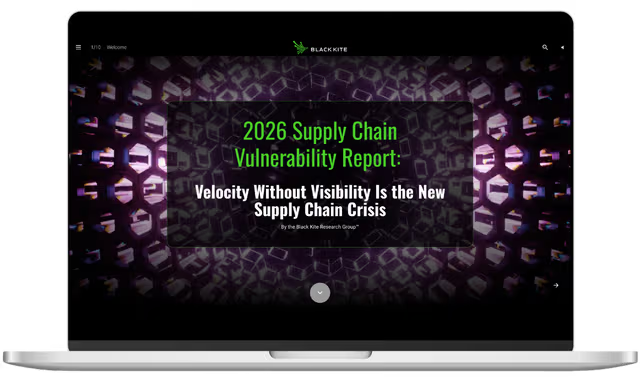
As software ecosystems grow more interconnected, cybercriminals are no longer targeting only individual organizations — they are exploiting entire supply chains. According to the latest findings from Black Kite, organizations are facing a new era of cyber risk where a small number of critical vulnerabilities can create widespread downstream impact across vendors, partners, and customers.
The newly released 2026 Supply Chain Vulnerability Report reveals a surprising reality: while more than 48,000 CVEs were published in 2025, only 58 vulnerabilities represented a truly critical threat to enterprise supply chains.
For enterprises across Asia-Pacific, this marks a major shift in how cyber risk should be managed. The challenge is no longer just visibility — it is prioritization, exposure management, and supply chain resilience.
The Growing Complexity of Supply Chain Cyber Risk
Modern organizations rely heavily on interconnected software vendors, cloud platforms, managed service providers, and open-source ecosystems. This dependency creates a much larger attack surface than traditional security programs were designed to handle.
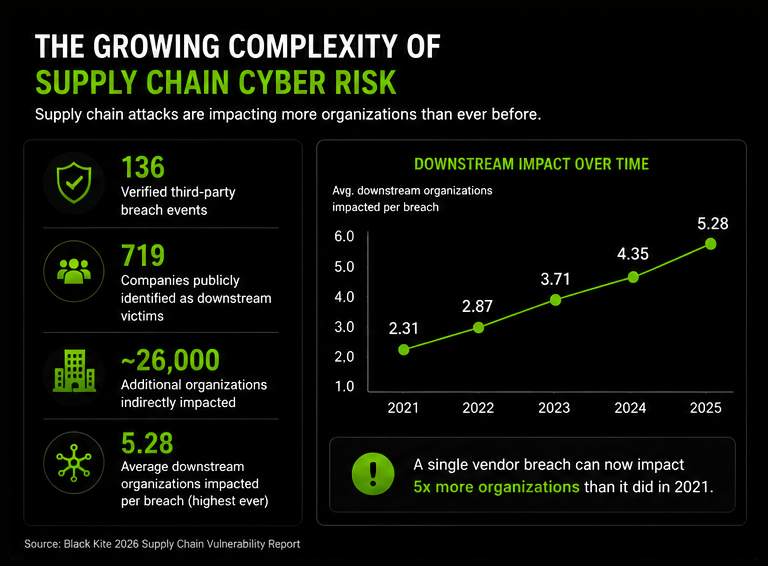
Black Kite’s research shows that attackers are increasingly exploiting highly connected vendors to create cascading impacts across multiple organizations. In 2025 alone:
- 136 verified third-party breach events were recorded
- 719 companies were publicly identified as downstream victims
- An estimated 26,000 additional organizations were indirectly impacted
- Each vendor breach affected an average of 5.28 downstream organizations — the highest level ever recorded
This demonstrates that today’s supply chain risks are no longer isolated incidents. A single compromise can rapidly propagate across industries, regions, and ecosystems.
Why Only 58 CVEs Truly Mattered
One of the most important insights from the report is that not every vulnerability poses equal business risk. Although over 48,000 vulnerabilities were disclosed in 2025, Black Kite researchers determined that only 58 met the criteria of being:
- Actively exploitable
- Relevant to enterprise supply chains
- Widely deployed across organizations
- Attractive to threat actors in real-world attack scenarios
This highlights a critical issue in modern vulnerability management: security teams are overwhelmed by volume, but attackers focus on a very small subset of high-impact weaknesses.
Traditional vulnerability programs that prioritize CVSS scores alone often fail to identify which exposures actually threaten business operations.
Instead, organizations need a risk-based approach that evaluates:
- Real-world exploitability
- Vendor dependency exposure
- Business criticality
- Attack path potential
- Supply chain concentration risk
AI Is Accelerating the Vulnerability Explosion
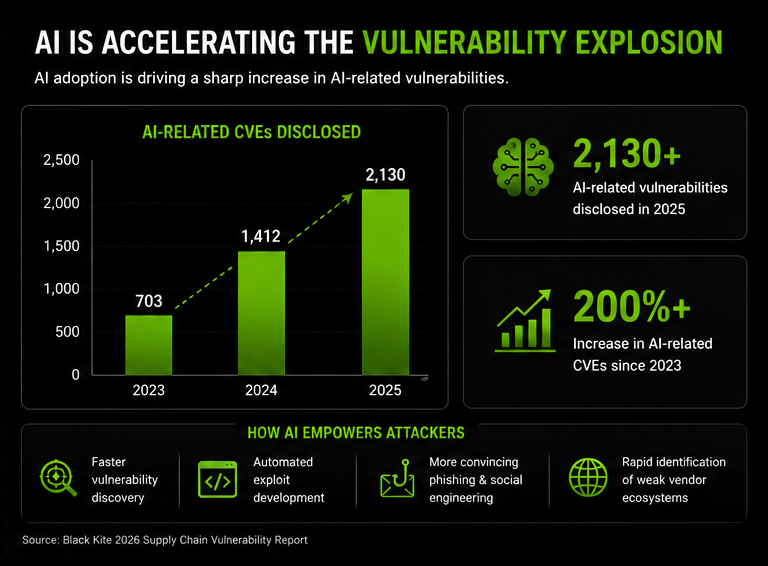
The report also identified the growing influence of AI on vulnerability discovery and exploitation. In 2025:
- More than 2,130 AI-related vulnerabilities were disclosed
- AI-related CVEs increased over 200% since 2023
As organizations rapidly adopt AI-powered applications, copilots, APIs, and automation platforms, the attack surface continues to expand.
At the same time, threat actors are leveraging AI to:
- Accelerate vulnerability discovery
- Automate exploit development
- Improve phishing and social engineering
- Identify weak vendor ecosystems faster
This creates a widening gap between organizations with mature exposure management capabilities and those relying on reactive patch management alone.
The “Silent Window” Problem
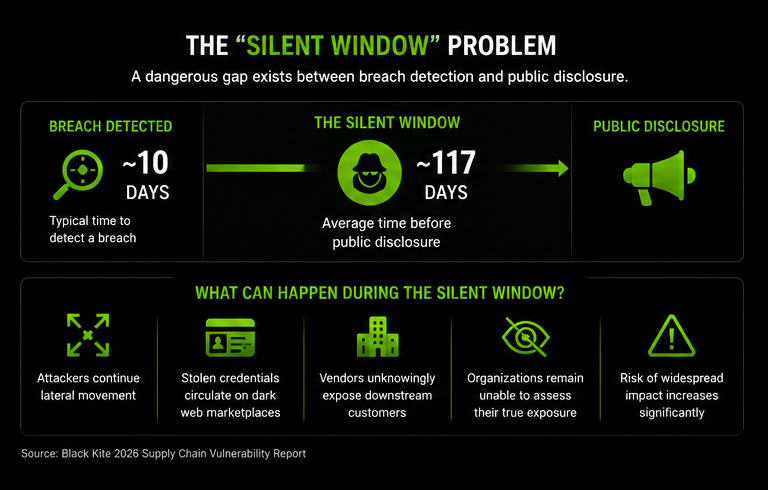
Another alarming finding from the report is the delay between breach detection and public disclosure. Black Kite observed that:
- Breaches are typically detected within 10 days
- Public disclosure often takes approximately 117 days
This creates what researchers call a “Silent Window” — a dangerous period where organizations may already be compromised without realizing they are part of a larger supply chain incident.
During this gap:
- Attackers may continue lateral movement
- Stolen credentials may circulate on dark web marketplaces
- Vendors may unknowingly expose downstream customers
- Organizations remain unable to assess their true exposure
For enterprises operating across distributed ecosystems, this significantly increases operational and regulatory risk.
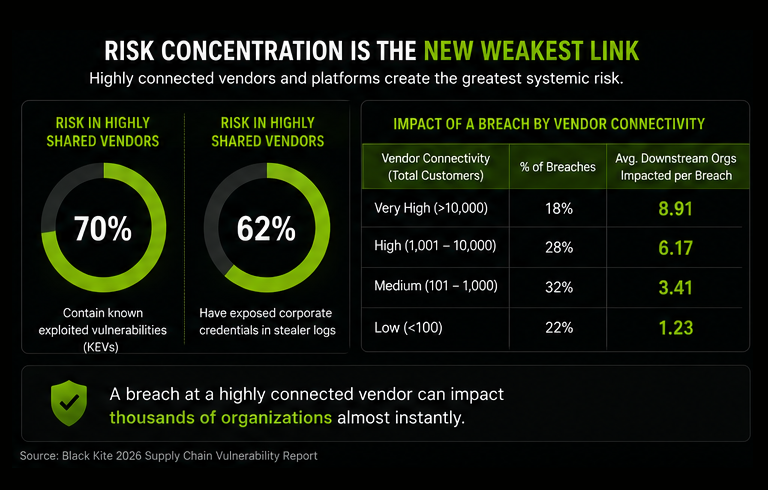
Risk Concentration Is the New Weakest Link
The report challenges the traditional belief that supply chains fail because of their “weakest link.” Instead, Black Kite found that the greatest danger lies within highly connected vendors and platforms that serve large numbers of organizations simultaneously.
Among the most heavily shared vendors analyzed:
- 70% contained known exploited vulnerabilities (KEVs)
- 62% had exposed corporate credentials circulating in stealer logs
This means a compromise involving a single strategic supplier could impact thousands of downstream organizations almost instantly.
For sectors such as:
- Manufacturing
- Healthcare
- Financial services
- Retail
- Critical infrastructure
The implications are particularly severe because operations increasingly depend on interconnected third-party technologies and managed services.
Why Traditional Third-Party Risk Management Is No Longer Enough
Conventional Third-Party Risk Management (TPRM) programs often rely on:
- Annual assessments
- Static questionnaires
- Vendor compliance checklists
- Point-in-time audits
However, modern supply chain threats evolve continuously. Black Kite’s findings reinforce the need for organizations to adopt:
- Continuous Threat Exposure Management (CTEM)
- Third-Party Risk Management (TPRM)
- Cyber Vulnerability & Exposure Management (CVEM)
- Threat Intelligence & Analytics
- Data Security Posture Management (DSPM)
- Endpoint & Enterprise Mobility Security
Security leaders must move beyond simply identifying vulnerabilities and focus on understanding:
- Which exposures are exploitable
- Which vendors introduce the highest risk concentration
- How attackers could chain vulnerabilities together
- Which attack paths lead to critical business systems
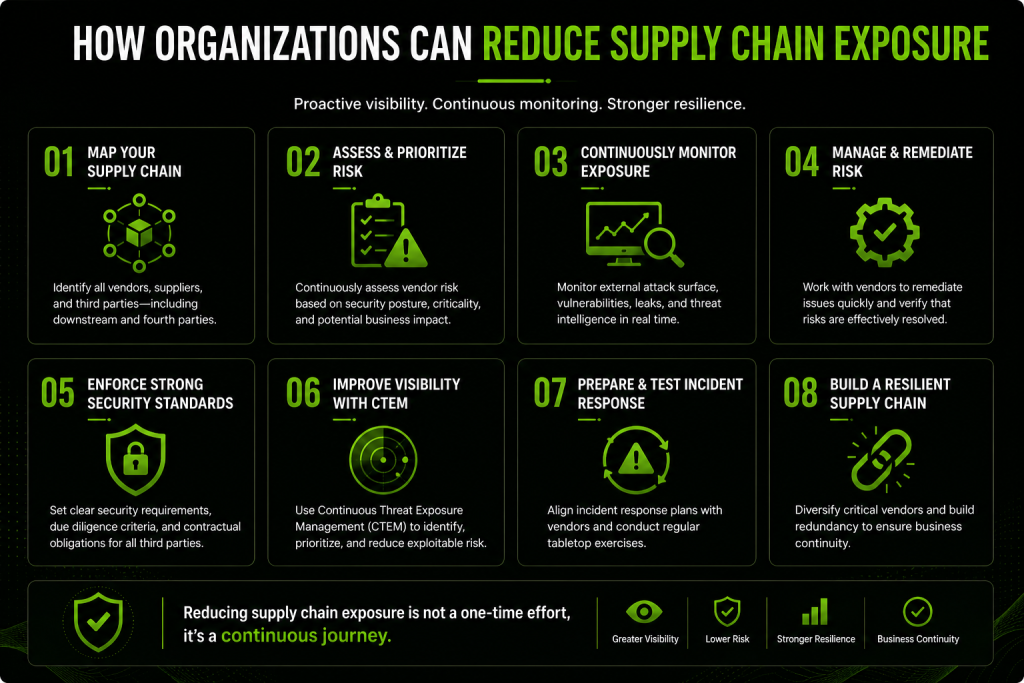
How Organizations Can Reduce Supply Chain Exposure
To strengthen cyber resilience, enterprises should consider several key strategies:
👓 Prioritize Exploitable Risk
Not all vulnerabilities deserve equal attention. Focus remediation efforts on exposures actively targeted by attackers.
🖥️ Continuously Monitor Third Parties
Vendor risk changes daily. Continuous monitoring provides visibility into emerging exposures, leaked credentials, ransomware indicators, and attack surface changes.
🥷 Adopt Exposure Management
Security teams should identify the most likely attack paths attackers could use to compromise critical systems.
👁️ Improve Supply Chain Visibility
Organizations need deeper visibility into:
- Vendor dependencies
- Software components
- Open-source exposure
- Cloud relationships
- Fourth-party and downstream risks
🛡️Strengthen Incident Response Coordination
Rapid communication between vendors, suppliers, and customers is critical to minimizing cascading impact during supply chain incidents.
The 2026 Supply Chain Vulnerability Report highlights a fundamental shift in cybersecurity strategy: success is no longer about managing the highest number of vulnerabilities — it is about identifying the vulnerabilities that matter most. As cyber threats become more interconnected, organizations must transition from reactive security operations to proactive exposure management and continuous risk intelligence.
At ACE Pacific Group, we help organizations strengthen cyber resilience through advanced solutions in:
- Continuous Threat Exposure Management (CTEM)
- Third-Party Risk Management (TPRM)
- Cyber Vulnerability & Exposure Management (CVEM)
- Threat Intelligence & Analytics
- Data Security Posture Management (DSPM)
By combining real-time risk visibility with actionable intelligence, enterprises can reduce supply chain exposure, prioritize critical threats, and build stronger cyber resilience across their digital ecosystem.
Frequently Asked
A supply chain vulnerability is a security weakness found within an organization’s network of vendors, suppliers, software providers, cloud platforms, or third-party partners that cybercriminals can exploit to gain unauthorized access, steal data, or disrupt operations.
Supply chain cyber attacks are increasing because organizations rely heavily on interconnected vendors, cloud providers, software platforms, and third-party services. Attackers often target suppliers to gain access to multiple downstream organizations at once.
Some of the biggest risks highlighted in the report include:
Third-party vendor breaches, AI-related vulnerabilities, known exploited vulnerabilities (KEVs), exposed credentials, delayed breach disclosures, highly connected vendor ecosystems
The “Silent Window” refers to the period between when a cyber breach is detected and when it is publicly disclosed. During this time, organizations may remain unaware that their vendors or systems have already been compromised.
AI is accelerating cybersecurity risks by enabling faster vulnerability discovery, automated exploit development, and more advanced phishing attacks. At the same time, organizations are rapidly adopting AI technologies that introduce new attack surfaces.
Third-party Risk Management (TPRM) helps organizations assess and monitor the cybersecurity posture of vendors, suppliers, and partners to reduce the likelihood of supply chain attacks and operational disruptions.
Ready to enhance your cybersecurity strategy?
Transform your organization’s cybersecurity approach into a competitive edge. Schedule a consultation with us today to explore tailored solutions that meet your needs. Don’t wait—empower your security posture now.

Products
About Us
Resources
Receive Our Newsletter
© 2026 ACE PACIFIC GROUP