
- June 3, 2026
- /
- Source: SecPod
AI-Powered Vulnerability Discovery Is Changing Cybersecurity. Is Your Organization Ready?
The Mythos Effect: Why Vulnerability Management Must Evolve Beyond
Traditional Approaches
For years, cybersecurity teams have operated under a familiar assumption: vulnerabilities are discovered, disclosed, assigned CVEs, patched, and then remediated by organizations according to their risk priorities.
That assumption is rapidly changing.
The emergence of AI-driven vulnerability discovery systems such as Anthropic’s Claude Mythos Preview has demonstrated something the cybersecurity industry has long anticipated: artificial intelligence can identify software vulnerabilities at a speed and scale that far exceeds human capability. Early testing has reportedly uncovered thousands of previously unknown vulnerabilities across operating systems, browsers, and critical infrastructure software, fundamentally altering the economics of vulnerability discovery.
This development is not simply another advancement in cybersecurity tooling. It represents a structural shift that challenges how organizations manage cyber risk, prioritize remediation, and maintain resilience in an increasingly AI-driven threat landscape.
The Traditional Vulnerability Lifecycle Is Under Pressure
Historically, organizations have relied heavily on public vulnerability disclosures, threat intelligence feeds, CVE databases, and vendor advisories to guide security operations. Security teams could reasonably assume that once a vulnerability became public, there would be a window of opportunity to assess exposure, prioritize remediation, and deploy patches before attackers developed effective exploitation methods.
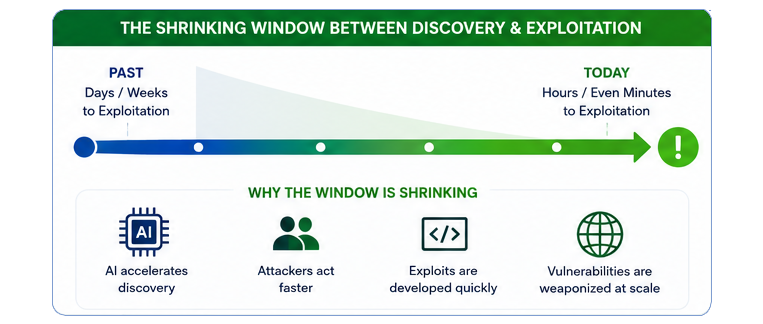
Today, that window is shrinking.
According to SecPod’s analysis, AI-assisted vulnerability discovery is accelerating the pace at which weaknesses are identified, while simultaneously reducing the time available for defenders to react. The challenge is no longer just finding vulnerabilities—it is managing exposure before adversaries can weaponize them. As AI capabilities continue to improve, organizations may face a future where vulnerabilities are discovered faster than they can be validated, prioritized, and remediated.

The Growing Zero-Day Visibility Gap
One of the most significant concerns highlighted by SecPod is what they describe as the “zero-day visibility gap.” Not every vulnerability discovered by AI immediately becomes public knowledge. Many vulnerabilities remain known only to the researcher, vendor, or discovery platform for a period of time before public disclosure occurs. During this interval, organizations remain exposed without visibility into the risk.
This creates a dangerous asymmetry:
- Attackers may gain awareness of vulnerabilities before defenders.
- Security monitoring tools cannot detect threats that have not yet generated observable indicators.
- Traditional vulnerability management programs remain dependent on known vulnerabilities and published advisories.
In other words, organizations may be securing what they know while remaining exposed to what they cannot yet see.
Discovery Is Only the Beginning
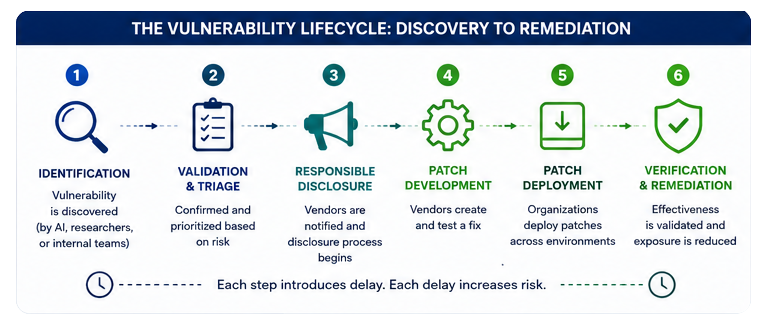
Finding vulnerabilities is important, but discovery alone does not reduce risk. SecPod emphasizes that several critical stages exist between vulnerability discovery and actual risk reduction:
- Vulnerability identification
- Validation and triage
- Responsible disclosure
- Patch development
- Patch deployment
- Verification and remediation
Each stage introduces operational delays that can increase organizational exposure. Even when a vulnerability is discovered quickly, enterprises still face challenges related to asset visibility, patch prioritization, change management, and operational constraints. The result is a growing disconnect between the speed of discovery and the speed of remediation.
Why Prevention Is Becoming More Important Than Ever
The cybersecurity industry has traditionally invested heavily in detection and response capabilities. While these remain essential, AI-driven vulnerability discovery highlights their limitations. Detection relies on observable signals. A vulnerability that exists but has not yet been publicly disclosed may generate no alerts, indicators of compromise, or threat intelligence references. In such scenarios, detection alone cannot close the security gap. This is why SecPod argues that prevention must become a central pillar of modern cybersecurity programs.
Preventive controls such as:
- Continuous vulnerability management
- Security configuration management
- Patch management automation
- Exposure reduction
- Attack surface management
- Security hardening
can reduce organizational risk regardless of whether a vulnerability has been publicly disclosed. The focus shifts from reacting to known threats toward minimizing the conditions that allow threats to succeed.
ACE Pacific Group's Perspective: Exposure Management Is the New Security Priority
At ACE Pacific Group, we believe the Mythos discussion is not fundamentally about AI. It is about exposure. AI has simply accelerated a trend that was already underway: organizations are accumulating vulnerabilities faster than traditional security processes can manage them. The challenge facing security leaders today is no longer just identifying vulnerabilities. Most enterprises already have thousands of known security findings across endpoints, servers, cloud environments, applications, and third-party ecosystems.
The real question is: Which exposures matter most, and how quickly can they be reduced?
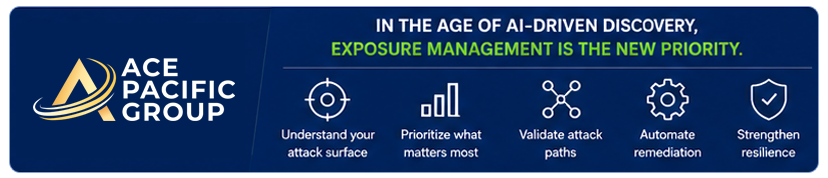
This is why modern cybersecurity programs must move beyond periodic vulnerability scanning and adopt continuous exposure management strategies. Organizations need to:
- Continuously assess their attack surface.
- Prioritize vulnerabilities based on exploitability and business impact.
- Validate attack paths that attackers can realistically use.
- Reduce remediation bottlenecks.
- Automate patching and configuration management wherever possible.
- Strengthen cyber resilience against both known and unknown threats.
In an era where AI can accelerate vulnerability discovery, security teams cannot rely solely on discovering more vulnerabilities. They must become better at managing exposure and reducing attack opportunities.
Building a More Resilient Security Strategy
The emergence of AI-driven vulnerability discovery should not be viewed as a reason for alarm. Instead, it should serve as a catalyst for modernization. Organizations that continue relying exclusively on traditional vulnerability management models may find themselves overwhelmed by increasing vulnerability volumes and shrinking remediation windows.
Forward-thinking organizations are already shifting toward:
⏳ Continuous Threat Exposure Management (CTEM)
Moving beyond periodic assessments to continuously evaluate and reduce cyber exposure.
🧿 Cyber Vulnerability & Exposure Management (CVEM)
Prioritizing vulnerabilities based on actual business risk and exploitability rather than severity scores alone.
⛓️ Security Configuration & Patch Management
Reducing attack surfaces through automated hardening, compliance monitoring, and timely remediation.
🧠 Threat Intelligence Integration
Understanding how emerging threats and attacker behaviors impact organizational risk.
🛡️ Cyber Resilience
Ensuring that critical systems remain secure and recoverable even when vulnerabilities are discovered faster than ever before.

The Mythos moment represents more than an AI milestone. It marks a turning point in how organizations must think about vulnerability management, exposure reduction, and cyber resilience. As AI accelerates vulnerability discovery, the traditional gap between discovery, disclosure, and exploitation will continue to narrow. Security teams can no longer depend solely on visibility into known vulnerabilities. They must proactively reduce exposure, automate remediation, and strengthen preventive controls across the enterprise.
At ACE Pacific Group, we help organizations navigate this evolving threat landscape through continuous exposure management, vulnerability risk reduction, attack path validation, and proactive cybersecurity strategies that strengthen resilience against both today’s threats and tomorrow’s unknown vulnerabilities.
Because in the age of AI-driven vulnerability discovery, the organizations that succeed will not be those that find vulnerabilities first—they will be the ones that reduce exposure fastest.
Is Your Vulnerability Management Strategy Ready for the AI Era?
As AI accelerates vulnerability discovery, organizations can no longer rely solely on traditional detection and remediation processes. The key to staying ahead lies in continuously reducing exposure, prioritizing what matters most, and strengthening cyber resilience.
Frequently Asked
Claude Mythos is an AI-powered vulnerability discovery system developed by Anthropic that demonstrates how artificial intelligence can identify software vulnerabilities at unprecedented speed and scale. Its significance lies in highlighting how AI may dramatically accelerate vulnerability discovery, potentially reducing the time between vulnerability identification and exploitation.
AI-powered vulnerability discovery increases the volume and speed of vulnerability identification, making traditional vulnerability management processes more challenging. Organizations must evolve from periodic scanning and reactive remediation toward continuous exposure management, risk-based prioritization, and automated remediation strategies.
The Mythos Effect refers to the growing impact of AI-driven vulnerability discovery on cybersecurity operations. As AI accelerates the identification of software weaknesses, organizations face shrinking remediation windows and must adopt more proactive approaches to exposure management and cyber resilience.
Advancements in artificial intelligence, automation, threat research, and exploit development are enabling vulnerabilities to be discovered and weaponized faster than ever before. As a result, organizations have less time to assess risk, deploy patches, and mitigate potential threats.
The zero-day visibility gap refers to the period between when a vulnerability is discovered and when it becomes publicly known. During this time, organizations may remain unaware of their exposure because traditional security tools and vulnerability databases have not yet identified or disclosed the vulnerability.
Detection and response remain essential components of cybersecurity, but they typically rely on known indicators and observable threats. Preventive measures such as vulnerability management, security hardening, patch management, and exposure reduction help minimize risk before vulnerabilities are exploited, including threats that have not yet been publicly disclosed.
Exposure Management is the continuous process of identifying, prioritizing, validating, and reducing cyber risks across an organization's attack surface. Rather than focusing solely on vulnerability counts, exposure management evaluates how vulnerabilities, misconfigurations, identities, and assets combine to create exploitable attack paths.
Organizations can strengthen their security posture by:
- Implementing continuous vulnerability and exposure management programs
- Prioritizing vulnerabilities based on exploitability and business impact
- Automating patch management and remediation workflows
- Improving attack surface visibility
- Validating attack paths and potential attack scenarios
- Integrating threat intelligence into risk management processes
These measures help organizations respond more effectively as vulnerability discovery continues to accelerate.
ACE Pacific Group helps organizations strengthen cyber resilience through Continuous Threat Exposure Management (CTEM), Cyber Vulnerability & Exposure Management (CVEM), attack path validation, security posture improvement, threat intelligence, and proactive risk reduction strategies. Our approach focuses on helping organizations identify critical exposures, prioritize remediation efforts, and reduce cyber risk before attackers can exploit vulnerabilities.
Ready to enhance your cybersecurity strategy?
Transform your organization’s cybersecurity approach into a competitive edge. Schedule a consultation with us today to explore tailored solutions that meet your needs. Don’t wait—empower your security posture now.

Products
About Us
Resources
Receive Our Newsletter
© 2026 ACE PACIFIC GROUP